
What you eat in the evening quietly shapes how well you sleep. Certain foods that help you sleep contain nutrients your body uses to wind down, relax your muscles, and produce the hormones that guide you into deep rest. None of them is a magic sleeping pill, but adding a few to your evenings is one of the simplest, most natural ways to sleep more deeply. Here are seven worth keeping in your kitchen, and why each one works.
A quick note before the list: the effect of these foods is gentle and cumulative, part of an overall calm evening rather than an instant switch. And timing matters, a light snack an hour or two before bed helps, while a heavy, late meal can actually disrupt your sleep. With that in mind, here are the seven.
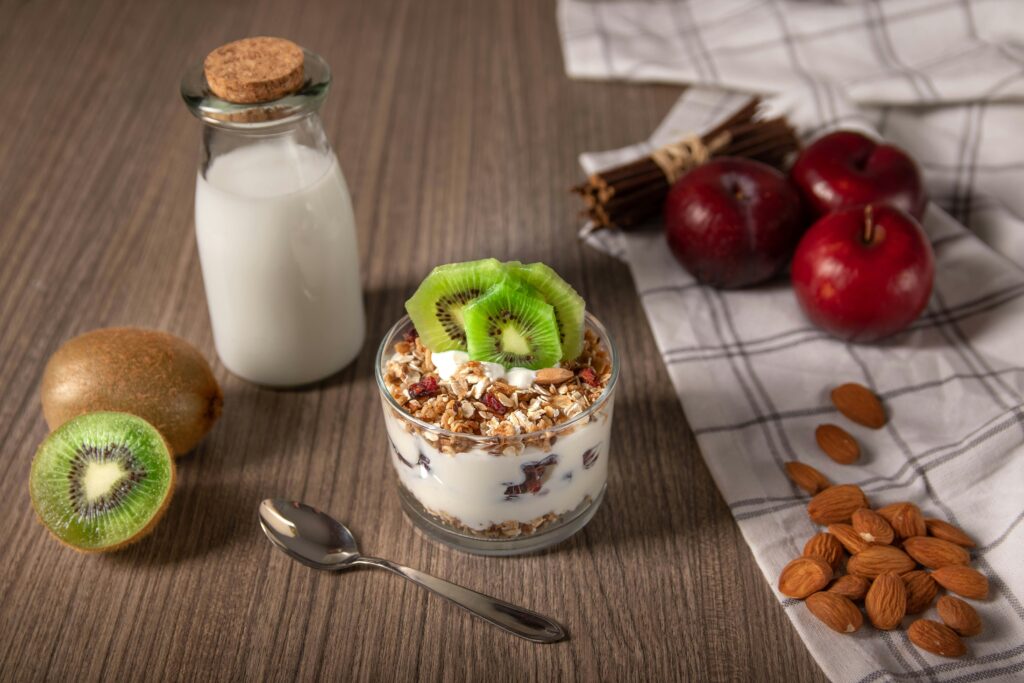
It helps to understand what these foods have in common. Most of them supply one of three things: magnesium, which relaxes muscles and calms the nervous system; tryptophan, an amino acid your body converts into sleep-regulating hormones; or melatonin itself, the hormone that tells your body it’s time to rest. When you eat foods rich in these, you’re giving your body the raw materials it uses to wind down naturally, rather than forcing sleep with anything artificial.
1. Almonds
Almonds are a small snack with a big sleep advantage: they’re a good source of magnesium, a mineral that helps relax your muscles and calm your nervous system. Low magnesium is linked with poorer sleep, so topping up gently in the evening makes sense.
A small handful an hour or so before bed is enough. They’re easy, portable, and pair well with other foods on this list, which is part of why they’re one of the simplest additions to an evening routine. Other nuts like walnuts and pistachios offer similar benefits, so you can rotate whichever you enjoy most without losing the effect.
2. Kiwi
Kiwi is one of the most studied sleep foods, and the findings are encouraging. It’s rich in antioxidants and serotonin-related compounds that appear to support the body’s natural sleep processes. Some research has found that eating kiwi in the evening is associated with falling asleep faster and sleeping more soundly.
Beyond that, it’s light, low in sugar, and won’t sit heavily before bed, exactly what you want in a late-evening snack. One or two is plenty. Because it’s so easy to eat and doesn’t require any preparation, kiwi is one of the simplest sleep foods to test for yourself over a week or two.
3. Warm milk and dairy
The old advice about warm milk before bed isn’t just folklore. Dairy contains tryptophan an amino acid your body uses to make serotonin and melatonin, the compounds that regulate sleep. It also provides calcium, which plays a role in that process.
The warmth adds a comforting, ritual quality that itself signals the day is ending. Whether it’s warm milk, a little yogurt, or a small piece of cheese, dairy is a gentle, familiar evening choice.
4. Bananas
Bananas are quietly one of the best pre-sleep foods. They contain magnesium and potassium, both of which help relax muscles, along with a small amount of tryptophan. That combination makes them a natural wind-down snack.
They’re also convenient and filling without being heavy, so they satisfy a late craving without overloading your stomach. A banana on its own, or with a few almonds, makes a simple sleep-friendly snack. They also need no preparation and are easy to keep on hand, which makes them one of the most practical options on this list for a busy evening.
5. Oats
Oats aren’t just a breakfast food. They contain melatonin, the hormone that signals your body it’s time to sleep, along with slow-release carbohydrates that can make tryptophan more available to your brain.
A small bowl of plain oats in the evening can be genuinely calming, and it’s warm and comforting in the same way milk is. Keep it simple and light rather than loading it with sugar, which works against the calming effect you’re after. A little cinnamon or a few banana slices is a better way to add flavor, and it stacks two sleep-friendly foods in one bowl.
6. Fatty fish
Fish like salmon, sardines, and mackerel are rich in omega-3 fatty acids and vitamin D, a combination that research links to better sleep quality, likely through its role in helping the body regulate serotonin.
This one is more of a dinner food than a bedtime snack, so the way to use it is simply to include fatty fish in your evening meals a couple of times a week. It supports your sleep from the inside out over time, rather than in a single night. If you’re also curious which foods work against your energy, our guide on foods that quietly drain your energy is a useful companion.
7. Tart cherries
Tart cherries, and tart cherry juice, are one of the few natural food sources of melatonin, which is why they’ve become a popular sleep aid. Some studies suggest they may help people fall asleep a little faster and improve sleep quality.
If you can’t find them fresh, unsweetened tart cherry juice works too. A small glass in the evening is the usual approach. As a bonus, a warm cup of chamomile tea alongside makes a calming, caffeine-free way to close the evening.
Where to Start Tonight
You don’t need to add all seven at once. Tonight, pick just one or two that are easy for you, a banana and a handful of almonds, or a small glass of warm milk, about an hour before bed. Keep the portion light, dim the lights, and let the snack be part of winding down rather than a full meal.
Then build from there. Over the next week, work a couple of these foods into your evenings and include fatty fish in a dinner or two. Pair the habit with a calming pre-sleep routine, like the one in our guide on building a simple night routine, and you give your body both the nutrients and the signals it needs. If you still struggle to drift off, our guide on how to fall asleep faster covers the behavioral side in more depth.
The Bottom Line
Foods that help you sleep work by supplying the raw materials your body uses to relax and produce its own sleep hormones, magnesium, tryptophan, and natural melatonin among them. The effect is gentle, not instant, so think of these as support for good sleep rather than a cure for sleeplessness. Keep the portions light, the timing an hour or two before bed, and let them become part of a calm evening. A few small choices on your plate can quietly add up to deeper, steadier nights.
Note that this article is general wellness information, not medical advice. If you have ongoing sleep problems or dietary conditions, it’s worth speaking with a doctor.