
Most people who feel like their money disappears too fast assume the problem is one big expense. Usually, it isn’t. The real damage comes from small, quiet charges that slip out of your account every month without you noticing — the hidden costs draining your bank account while you focus on the obvious bills. Individually they look harmless. Added up over a year, they often come to more than a decent vacation. The good news is that once you can see them, most are surprisingly easy to stop.
This guide walks through the most common hidden costs one by one. For each, you’ll see exactly how it drains you and exactly what to do about it.
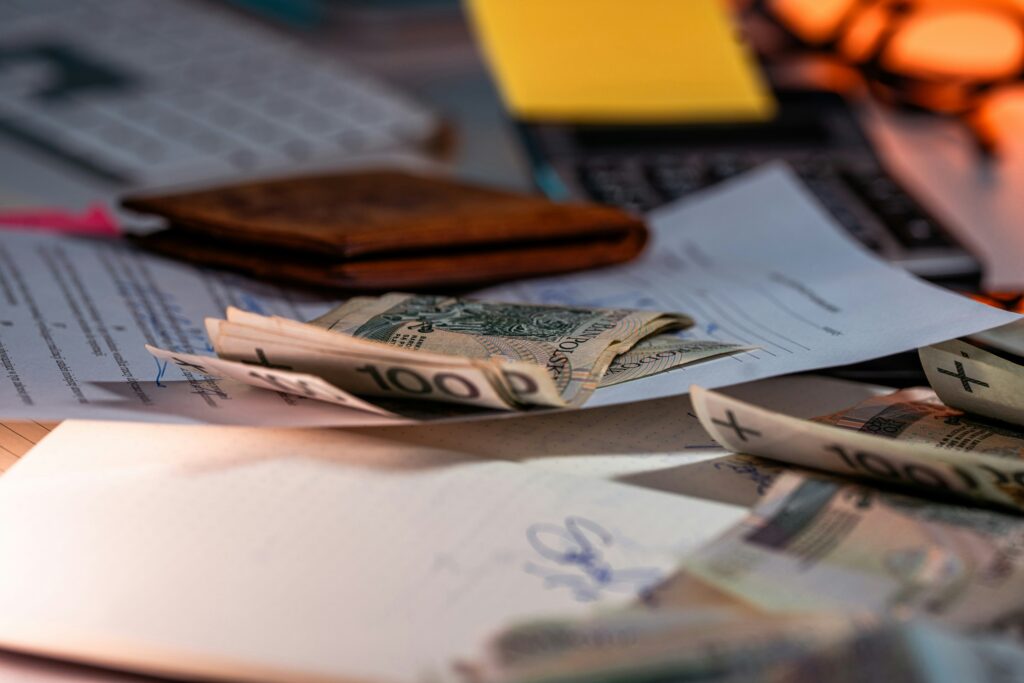
Before that, one quick exercise that makes everything else hit home: take any small monthly charge — say a modest streaming subscription — and multiply it by twelve. Now do the same for three or four of them. That number, the annual total, is the real measure of a hidden cost, and it’s the number these charges depend on you never calculating. Keep that multiplication in mind as you read, because it’s the difference between “it’s only a few dollars” and seeing where your money actually goes.
1. Cancel the subscriptions you forgot you had
The threat. Subscriptions are designed to be easy to start and easy to forget. A free trial you never canceled, a streaming service you stopped watching months ago, an app you used once — each quietly renews on its own schedule, and because the amounts are small, they never trigger alarm. The danger is precisely that they’re invisible. Money you’ve mentally written off as “gone” keeps leaving every month for something you no longer use.
The solution. Pull up your last two or three bank and card statements and list every recurring charge. Most people are genuinely surprised by what they find. Cancel anything you haven’t used in the past month without hesitation; if you miss it, you can always resubscribe. Then set one reminder a year to repeat this review, because new subscriptions accumulate faster than you expect. This single habit often recovers more money than any other step on this list, and it takes about twenty minutes.
2. Cut the bank and card fees you’ve stopped noticing
The threat. Account maintenance fees, ATM charges, foreign transaction fees, minimum-balance penalties, and late-payment charges share one feature: they’re small enough to ignore and frequent enough to add up. Banks count on you treating them as the unavoidable cost of having an account. Often, they’re not unavoidable at all — you’re simply paying for the wrong account or a habit you could easily change.
The solution. Read one full statement closely and flag every fee. For each, ask a simple question: can I avoid this? A monthly maintenance fee may vanish if you switch to a no-fee account. ATM charges disappear when you use your own bank’s machines or withdraw larger amounts less often. Late fees stop the moment you set up automatic minimum payments. Many of these are one-time fixes that quietly save you money every month afterward — the best kind of change there is.
3. Catch lifestyle creep before it spreads
The threat. This is the most dangerous hidden cost because it feels like progress. As your income rises, your spending quietly rises to match it. The occasional treat becomes a routine, the standard option becomes the premium one, and somehow you’re earning more but saving the same — or less. Lifestyle creep is hard to spot because nothing about it feels wasteful in the moment. Each individual upgrade is reasonable. It’s the steady, unnoticed drift that does the damage.
The solution. The fix isn’t to deny yourself everything; it’s to make the upgrades deliberate instead of automatic. The next time your income increases, decide in advance where the extra money goes before your spending expands to absorb it. Direct a fixed share straight into savings, so the raise improves your future rather than just your monthly outflow. Awareness alone is powerful here: simply recognizing lifestyle creep for what it is makes it far easier to catch. Several of the patterns behind it overlap with the everyday traps in our guide on bad money habits you need to stop.
4. Stop paying the convenience tax on autopilot
The threat. Convenience is comfortable, and that comfort has a price you rarely calculate. Food delivery instead of cooking, the corner-shop markup instead of a planned grocery run, same-day shipping, the airport coffee, the premium for not planning ahead — each is a small surcharge you pay to save a little time or effort. Paid occasionally, none of it matters. Paid by default, several times a week, the convenience tax becomes one of the largest hidden costs in a typical budget.
The solution. You don’t need to eliminate convenience — you need to stop paying for it on autopilot. Pick the one or two convenience habits that cost you most and replace them with a small amount of planning. Cooking a few more meals a week, keeping basics stocked so you’re not buying at marked-up prices, or simply pausing before each convenience purchase to ask whether it’s worth it can recover a meaningful sum. The aim is to pay for convenience when it genuinely helps and to stop paying for it out of pure habit.
5. Clear the interest on balances you carry
The threat. Carrying a balance on a credit card or paying only the minimum is one of the most expensive hidden costs of all, because the charge compounds. You’re not just paying for what you bought; you’re paying a recurring fee for the privilege of not having paid it off yet, month after month. Because the cost is folded into a statement you may barely read, it’s easy to overlook just how much it adds up to over a year.
The solution. Prioritize clearing high-interest debt above almost everything except essential bills, because the return on paying it off is guaranteed and immediate. Pay more than the minimum whenever you possibly can, and aim to clear card balances in full each month. If you’re carrying balances across several cards, focus on the highest-interest one first while keeping minimums on the rest. Understanding the basics of how interest and balances work — the kind of grounding covered well in this overview of personal finance — turns a vague worry into a clear plan.
6. Track the small amounts that quietly repeat
The threat. A few dollars here and there feels like nothing, and on any single day it is nothing. But spending is rarely a single day — it’s a pattern. The daily coffee, the regular snack, the small impulse buy each time you pass a particular shop: multiply any small repeated expense by thirty days, then by twelve months, and the total is often startling. The threat isn’t the amount; it’s the repetition.
The solution. You don’t have to give these up — you just have to see them clearly. For one week, write down every small purchase. The act of tracking is usually enough to reveal which “harmless” habits are quietly significant. Then decide, with full information, which ones are worth keeping and which you’d rather redirect. Some small pleasures are absolutely worth the money; others you’ll happily drop once you see the yearly total. Either way, you’re now choosing instead of leaking.
Putting it together
Notice the pattern running through all six: none of these hidden costs is dramatic, and that’s exactly why they work against you. They survive on being unnoticed. The moment you bring them into the light — by reading a statement, tracking a week, or pausing before a purchase — most of their power disappears. You don’t need extreme frugality or a complicated system. You need visibility, and a few deliberate decisions.
If you want to turn the money you recover into real progress rather than just letting it drift back out, it helps to give it a job. Building these recovered amounts into a simple plan, like the approach in our guide on how to save money every month or the straightforward framework in the 50/30/20 budget rule, ensures the savings actually accumulate instead of quietly evaporating again.
Your Money Leak Checklist
Work through this once and you’ll catch the large majority of hidden costs draining your account:
– [ ] Reviewed the last two to three months of statements for recurring charges
– [ ] Cancelled every subscription unused in the past month
– [ ] Flagged every bank and card fee and identified which are avoidable
– [ ] Switched to a no-fee account or set up auto-payments to kill recurring fees
– [ ] Decided in advance where any income increase will go
– [ ] Identified my one or two costliest convenience habits and made a plan to reduce them
– [ ] Made a plan to clear the highest-interest balance I’m carrying
– [ ] Tracked one full week of small purchases and reviewed the total
– [ ] Assigned the money I recovered to savings or debt, so it doesn’t drift back out
– [ ] Set a yearly reminder to repeat this whole review
Final Word
The hidden costs draining your bank account aren’t dramatic, which is exactly what makes them so effective. They thrive on staying invisible, slipping out in amounts too small to notice while quietly adding up to a serious sum over a year. You don’t need a stricter budget or a life of denial to stop them — you need to see them. Read one statement closely, track one ordinary week, and run through the checklist above. The leaks you find were never necessary expenses; they were just the price of not looking. Now that you’re looking, you can keep that money where it belongs.